
Energy Audit in Dubai: Home, Commercial and Industrial Energy Audits, Power Quality and Savings
An energy audit is a measured study of where a property's electricity goes, followed by a ranked list of the changes that would cut the bill and what each would cost. It starts from your DEWA bills and ends with a report you can act on. In between, we walk the site, put meters on the main supply and the big loads, and compare what we measure with what the bills show.
Circuit Dubai carries out energy audits across Dubai for villas, apartments, offices, shops, hotels, warehouses and plants. Our work covers the electrical side of energy use: the bills and tariff, the load profile, air-conditioning and hot-water loads, lighting, standby loads, power factor and harmonics, and whether solar would pay.
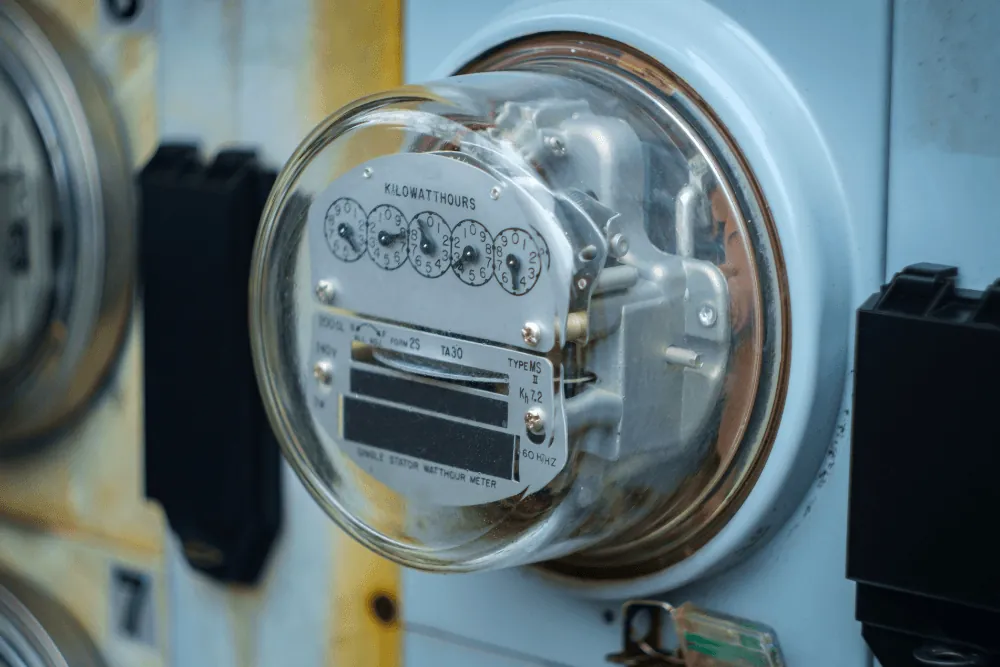
What an energy audit with us includes
A review of 12 months of bills and the tariff, so we know the baseline and the seasons before we measure anything.
Measurement and not guesswork, with meters on the main supply and the largest circuits, logged over a period that captures a normal cycle of use.
A check of the big loads, meaning air conditioning, water heating, lighting, pumps and motors, and the standby loads that run when nobody is using anything.
Power factor and harmonics, measured where the site is large enough or the equipment suggests they matter.
Findings ranked by cost, saving and payback, so the first items on the list are the ones worth doing first.
A written report and a briefing, with the actions listed, and a re-measurement after the work if you want proof of the result.
The numbers at a glance
Typical answer for Dubai
Before you book an energy audit, decide what you want it to answer. A bill that jumps in summer, a plan to fit solar, a landlord's request and an ISO 50001 project each need a different audit, and a clear question keeps the cost down. If you send twelve months of bills first, we can give you a view in a short chat on whether an audit is likely to find anything worth the fee. The sections below explain the terms, the levels, how an audit is done and what it costs, so you can judge a quote before you accept it.
Energy audit terms: what people search for and what each means
People look for an energy audit under many names, and several of the names come from programmes in other countries. The table matches each to what it means for a Dubai property.
| If you searched | What it means |
|---|---|
| Energy audit, the energy audit, energy audit services | A structured study of how a property uses energy, with measurements, findings and a report. This page describes our service |
| Energy audit system | Two different things. It can mean the method, or a metering and monitoring system that records usage all the time. We do the audit, and we fit monitoring where it will pay for itself |
| Energy audit inspection | The site visit part of the audit: reading nameplates, checking boards and plant, and measuring. It is not a safety inspection. See our electrical inspection service for that |
| Electrical energy audit | An audit focused on electricity: bills, load profile, power factor, harmonics, lighting, motors and air-conditioning power |
| Conducting an energy audit, energy audit procedures | The steps from the first call to the report. The step-by-step section below sets them out |
| Preliminary energy audit, detailed energy audit | The shallow and the deep versions of an audit. The levels section explains the difference |
| Internal energy audit | An audit run by your own staff. We can support it with meters and a checklist. In ISO language an internal audit can also mean checking an energy management system, which is a separate exercise |
| Periodic energy audit | An audit repeated at set intervals, or after a major change to the site. See the report and savings section |
| Green energy audit | A sustainability-minded audit that looks at energy use and renewable options. We cover energy use and solar. We do not issue green building ratings |
| Energy audit and management, energy audit & management, energy management and energy audit | The audit finds the savings, and management keeps them: monitoring, targets and regular reviews |
| Energy audit firm, energy audit companies, energy audit consultants, energy audit near me | A contractor or consultant to carry out the audit. See the cost and choosing section |
| Home energy audit, house energy audit, household energy audit, residential energy audit, personal energy audit | An audit of a house or apartment. See the homes section |
| Commercial energy audit, energy audit commercial buildings, industrial energy audit, building energy audit, HVAC energy audit | An audit of a business property, a plant or the air-conditioning system. See the commercial and industrial section |
| ASHRAE, ISO, EED, ESCO, NRCan, APS, PSO, SGS, Schneider Electric | Standards, programmes and organisations. The standards and programmes section says what each is and whether it applies in Dubai |
What an energy audit finds, and where the savings come from
An audit finds waste, and it finds it in a short list of places. Knowing the list tells you whether an audit is likely to pay.
| Where the energy goes | What an audit looks for | What the fix can be |
|---|---|---|
| Air conditioning | Setpoints, run-hours, units running in empty rooms, poor controls, old or oversized equipment | Better controls, scheduling, zoning, smart thermostats, replacement of a failing unit |
| Hot water | Heating that runs all day, long pipe runs, no timer | A timer or controller, a correctly sized heater |
| Lighting | Old lamps, lights left on, over-lit areas | LED conversion, sensors, timers and zoning |
| Standby and always-on loads | Equipment drawing power overnight and at weekends | Switching off, timers, smart sockets |
| Motors and pumps | Pumps running longer than needed, oversized motors, no speed control | Timers, variable speed drives, resizing |
| Power factor and harmonics | Low power factor, distorted current, overloaded neutrals | Power factor correction, harmonic filters |
| The tariff and the connection | The wrong tariff, a connection larger than the load needs | Correct tariff, a load review |
| Generation | Roof space that could host solar | A solar energy assessment and, if it pays, an installation |
Savings without a percentage
We do not quote a typical saving, because there is none. A villa with one oversized air conditioner and a water heater on all day has different options from a warehouse with old lighting and a low power factor. The audit puts a figure on each measure for your property, with the assumptions written down so you can check them. Energy audit savings come in three kinds: no-cost changes, such as setpoints and switching off; low-cost changes, such as timers, sensors and lamps; and capital projects, such as a chiller, a drive or a solar array. The report keeps the three apart, because the first kind can start tomorrow.
When an audit is not worth it
- The bills are small and steady, and nothing on the site has changed. A short call and a bill review may be enough.
- You already know the answer, for example that an old air conditioner needs replacing. Replace it, and audit afterwards if you want to measure the result.
- You want a certificate and not savings. An audit that is meant to satisfy a lender, a landlord or a standard needs to be scoped for that purpose from the start.
Preliminary, detailed and ASHRAE Level 1, 2 and 3 energy audits
The depth of an audit is the biggest factor in its cost and in what you get. The industry uses three levels, defined in ASHRAE's audit procedures. Searches for the ASHRAE energy audit, ASHRAE level 1 energy audit, level 1 ASHRAE energy audit and level 1 energy audit all refer to the first of the three. A preliminary energy audit is the same idea in plainer words.
| Level | What it includes | What you get | When it suits |
|---|---|---|---|
| Level 1: walk-through, also called a preliminary energy audit | Brief interviews with site staff, a review of the utility bills and operating data, and an abbreviated walk-through | A high-level analysis of energy use, a baseline and a short list of the obvious fixes and operating faults | A first look, a small property, or a check before deciding whether to go deeper |
| Level 2: energy survey and analysis, also called a detailed energy audit | A detailed look at the envelope, lighting, air conditioning, hot water, plug loads and process loads, with measurement and discussion with management and occupants | A report listing energy efficiency measures, from low-cost fixes to capital upgrades, with costs and savings | Business properties and larger homes where real savings are expected |
| Level 3: detailed analysis of capital-intensive modifications | Extended data collection, which may include temporary loggers, and a calibrated simulation of the building | Investment-grade figures and cost estimates to support a large project | A major retrofit, a new chiller plant, a large solar and storage project |
The same ideas appear under other labels. Level 2 energy audit, level 2 ASHRAE energy audit, ASHRAE level 2 energy audit and ASHRAE level II energy audit all mean the middle level. Level 3 energy audit and ASHRAE level 3 energy audit mean the third. The cost section covers the ASHRAE level 2 energy audit cost.
Which level do you need?
Start from the question. A homeowner asking why the summer bill is so high needs a Level 1 audit with some measurement, which is what our home audit gives. A business that wants a list of upgrades with costs wants Level 2. A business about to spend a large sum on plant wants Level 3 before it signs anything. Completing a lower level first is a sensible route, because it shows whether a deeper one is justified.
How an energy audit is conducted, step by step
Conducting an energy audit follows an order, and the energy audit procedures below are the ones we work through. Skipping the baseline or the measurement is how an audit turns into a list of opinions.
1. Agree the question and the boundary
We agree what the audit is for, which buildings or systems it covers and what the report must contain. A report for a lender is different from a report for a homeowner.
2. Collect the bills and the facts
We take twelve months of bills, the tariff, the connection size, the floor area, the hours of use, the equipment list and any past audits or meter data. The bills give the baseline that every saving is measured against.
3. Walk the site
We walk the property with someone who knows how it runs. We look at the main board, the plant, the lighting, the air conditioning and the hot water, and we note nameplates, controls and anything running that should not be.
4. Measure
We fit meters on the main supply and on the large circuits, and we leave them logging. Spot readings give a snapshot. Logging gives the pattern across a day and a week, which is what shows the standby load, the peaks and the effect of the weather.
5. Analyse
We build the baseline, split the consumption by use as far as the measurements allow, and compare it with what the bills show. Where the two do not match, we find out why before we write anything.
6. List and rank the measures
Each measure gets a cost, an expected saving and a payback, with the assumptions written out. We separate no-cost, low-cost and capital measures, and we note anything that depends on another measure.
7. Report and brief
You receive the report and a short briefing to go through it. We explain what each finding rests on, so you can challenge it.
8. Follow up
If you want, we carry out the first measures, re-measure afterwards and tell you what changed. A saving that has not been measured is still an estimate.
What we measure, and with what
An electrical energy audit rests on measurements, and the instruments decide what can be measured. The table lists what we use and why.
| Instrument | What it records | Why it matters |
|---|---|---|
| Clamp meter | Spot current, and on some models power, at a board or a single circuit | A quick check of a load, such as an air conditioner or a water heater, without interrupting it |
| Power logger or power quality analyser | Voltage, current, kW, kVA, power factor and harmonics, logged over days or weeks | The main tool. It shows the load profile, the peaks, the overnight base load and the quality of the supply |
| Data loggers | Temperature, humidity, and the on and off times of equipment | Shows how long air conditioners and pumps actually run, and what the room temperature was when they did |
| Plug-in socket meter | The energy drawn by a single appliance | Settles arguments about the fridge, the dehumidifier or the pool pump |
| Lux meter | Light levels | Shows over-lit spaces and under-lit work areas before a lighting change |
| Thermal camera | Hot connections and overloaded equipment | Finds a loose or overloaded joint that wastes energy as heat. See our thermal imaging inspection service |
| Your DEWA bills and meter data | Monthly consumption and demand | The baseline every finding is checked against |
How long we log for
A snapshot can mislead. An air conditioner that was off during the visit, or a pump that runs overnight, will not appear in a reading taken at noon. We log long enough to catch a normal cycle of use, which means at least a full week, so that the weekday and weekend patterns both appear. Seasonal swings are handled by the twelve months of bills, which tell us how the load changes through the year.
What we need to do the measuring
- Access to the main board and the sub-boards that feed the big loads.
- A safe place to leave a logger, away from foot traffic and water.
- A person who knows the site, to say what is normal and what is not.
- Notice of anything unusual during the logging, such as a shutdown, a party or a broken air conditioner, because it affects how we read the data.
Stop and keep clear of the main board and any open panel while we are fitting or removing meters. Do not open a board, move a clamp or unplug a logger yourself, because the connections are live and a loose clamp can cause a fault. If you see burn marks, smell burning or hear buzzing from a board, switch off at the main breaker only if it is safe to reach, call 999 if there is fire, and message us on WhatsApp for an emergency electrician.
Home energy audit in Dubai: villas and apartments
A home energy audit looks at how a house or apartment uses electricity and where it can use less. If you searched for a house energy audit, household energy audit, residential energy audit or energy audit in home, this is the service. A villa audit is larger than an apartment audit, because there is more to look at, and the pool, irrigation and outdoor lights add loads that apartments do not have.
What a home audit covers
| Area | What we check | What we measure | Typical action |
|---|---|---|---|
| Bills | Twelve months of DEWA bills and the tariff | Monthly use and the summer-to-winter swing | A clear baseline |
| Air conditioning | Setpoints, run-hours, how many units run in empty rooms, thermostat type | Power draw and hours of running for each unit | Schedules, zoning, smart thermostats, a replacement plan |
| Water heating | Heater size, timer and temperature setting | Run-time and energy | A timer or controller. See our water heater installation service |
| Lighting | Lamp types and hours | Total lighting load | LED conversion, sensors and timers |
| Pool, pumps and irrigation | Pump size and run-hours | Power and hours | Timers and a shorter running time |
| Standby loads | What draws power overnight | Overnight base load | Switch off, timers and smart sockets |
| EV charger | When and how fast it charges | Charging load | Scheduling the charge. See our EV charger installation service |
| Solar potential | Roof area, shading and use pattern | The daytime load | A solar energy assessment |
Our audit measures electrical use. It does not test the building's insulation or measure airtightness, and it does not judge refrigerant or duct performance. If the findings point to a problem there, we say so and suggest the right specialist.
Home energy audit near me, home energy audit companies and home energy audit service
If you searched for a home energy audit near me, a home energy audit service or home energy audit companies, you want someone who will visit, measure and report. We work across all of Dubai. If you searched for a home energy audit business because you want to start one, this page describes a service we provide and not a training course. If you want one for your business premises, see the commercial section below.
Personal energy audit: what you can do yourself first
A personal energy audit is a check you make yourself, and it is worth doing before you book anything. It takes an evening.
- 1Lay out twelve months of bills and note the highest and lowest months.
- 2List the big loads, meaning air conditioners, the water heater, the pool pump and the EV charger.
- 3Check the setpoints and timers on each air conditioner and the water heater.
- 4Walk the house at night and note what is still running.
- 5Count the lamps and their types, and note which are on for long hours.
- 6Send us the bills and your list, and we will say whether a measured audit is likely to find more.
This will not replace measurement. It tells you where to point the meters.
Commercial, building, industrial and HVAC energy audits
A commercial energy audit covers offices, shops, restaurants, clinics, hotels and mixed-use buildings. An energy audit of commercial buildings, a building energy audit and an industrial energy audit share a method, but the loads differ, and so does what is worth measuring.
| Property | What carries the load | What an audit looks at first |
|---|---|---|
| Office or retail | Air conditioning, lighting, IT | Operating hours against occupancy, lighting controls, setpoints and scheduling |
| Restaurant or kitchen | Refrigeration, cooking, extraction, air conditioning | Run-hours, extraction speed control, cold room loads |
| Clinic or lab | Air conditioning, specialist equipment, standby supplies | Out-of-hours loads and the UPS and standby systems |
| Hotel | Guest-room air conditioning, laundry, kitchens, pools | Guest-room controls, central plant and back-of-house loads |
| Warehouse or cold store | Lighting, refrigeration, forklifts and chargers | Lighting hours and controls, defrost cycles, charger timing |
| Factory or plant | Motors, compressors, heating, process equipment | Motor sizing and speed control, compressed air, power factor and harmonics |
| Mixed-use building | Common areas, lifts, pumps, central plant | Pumps, lift standby, car-park lighting and ventilation |
HVAC energy audit
An HVAC energy audit looks at the load that most needs checking in a Dubai building, and the electrical side is where we can measure. We log the power drawn by chillers, air handlers, fan coil units, pumps and fans, and we compare it with the hours they run and the temperatures they hold. That shows plant running when it need not, units fighting each other and controls that were set once and forgotten. To judge how efficiently a chiller turns electricity into cooling, you also need the cooling output, which needs flow and temperature measurements and a mechanical engineer. See our AC electrical connection service for the supply side and our smart thermostat installation service for controls.
Industrial energy audit
An industrial energy audit adds motors, compressors, process heat and the supply itself. We measure motor loads and look for oversizing, long idle running and the chance to fit a variable speed drive. We check power factor and harmonics, because plants carry the equipment that distorts them. We also check the incoming supply and the loading of the board and transformer. See our three-phase and load upgrade service where the audit shows a supply that is stretched.
Making the audit useful to a landlord, a lender or a manager
If the report is for a third party, tell us at the start. A landlord may want a list of tenant-side measures, a lender may want payback periods in a set form, and a facility manager may want a plan broken into phases. The report can be written to suit, and it is much harder to adapt later.
Power factor, harmonics and power quality
Power factor and harmonics are the part of an audit that is easy to miss, because they do not show on the bills in an obvious way. They decide how much current a site draws for the useful power it uses, so they affect cables, transformers and, where the tariff includes it, the bill.
Power factor in plain terms
Real power, in kW, does the work. Apparent power, in kVA, is what the supply has to carry. Power factor is the ratio of the two. A motor, a transformer or a fluorescent ballast draws extra current that does no work, and that pulls the power factor down. A low power factor means more current for the same kW, which loads the cables, the transformer and the generator. Whether it costs you money depends on the tariff. See our power factor correction service for the equipment that fixes it.
Harmonics and power factor
Harmonics are distortions in the current, made by electronic loads such as LED drivers, variable speed drives, UPS units, computers and inverters. They add heat in cables and transformers, can overload the neutral and can trip breakers for no obvious reason. Harmonics and power factor are linked, and the phrase harmonic power factor describes the distortion part of the picture. In a distorted system, the true power factor is the displacement power factor, which comes from the phase angle between voltage and current, multiplied by a distortion factor. A site can show a good displacement power factor and still carry heavy distortion.
Harmonic filter and power factor correction
Capacitor banks are the usual way to raise power factor, and they behave badly in a distorted system. A capacitor can resonate with the supply at a harmonic frequency and make the harmonics much worse, so a bank can fail early or damage other equipment. The answer is to measure the harmonics before choosing the bank. Where they are significant, the bank is detuned with reactors, or a harmonic filter is added, or an active filter is used instead. If you searched for harmonic filter power factor correction, this is the point of the search: the two are chosen together and not separately.
| What you see | What it may point to | What we do |
|---|---|---|
| A low power factor on the bill or the meter | Lightly loaded motors, transformers, old ballasts | Log the site, then size correction from the measured load |
| A capacitor bank that keeps failing | Resonance with harmonics | Measure harmonics, then detune or filter |
| Hot neutral conductors or tripping at light load | Third harmonic currents from electronic loads | Measure the neutral, and fix the source or upgrade the neutral |
| Overheating in a transformer or generator without a heavy load | Harmonic heating | Measure total harmonic distortion, derate or filter |
| Electronic equipment misbehaving, resetting or failing | Voltage distortion, dips or surges | Log voltage over time. See our surge protection service for the surge side |
Power quality consultants
A power quality consultant measures and interprets the supply: voltage dips and swells, harmonics, flicker and imbalance. We carry out that measurement as part of an audit and explain what it means for the equipment. For a complex study, for example a plant with a large drive installation and a limit to meet, a specialist harmonic study may be needed, and we say so.
Energy saving switches for hotel rooms
Guest rooms are a special case, because a room can sit empty with the lights and air conditioning left as the guest set them. A hotel energy saving switch ties the room's power to the guest being there.
How a key card hotel energy saving switch works
The guest inserts the room card into a holder beside the door, and that closes the switch. Taking the card out opens it, and after a short delay the room moves to its saving state: the lights go off and the air conditioning setpoint relaxes. The same switch is sold under several names, including the energy saving switch for hotel rooms, the hotel energy saving switch and the key card switch. A card holder can control the room through a contactor or relay, or through a room controller linked to a building system.
What we install and how
- The card holder or switch, matched to the card type the hotel uses, where one is in use.
- The contactor or relay, rated for the load it controls.
- The circuits it controls, such as the lights, the air conditioning and selected sockets.
- The circuits it leaves alone, such as the minibar, the safe, a phone charger socket and anything the guest needs when they step out.
- A delay, so the room does not go dark the instant the card comes out.
- Door or balcony contacts, where the air conditioning should pause when a door is open.
- Fire and emergency circuits, which stay on regardless. The emergency lighting and fire alarm must never sit behind a card switch.
The savings depend on occupancy, the type of air conditioning and how the room is used, and we do not quote a figure for Dubai. A hotel audit measures a sample of rooms with and without the switch before recommending a hotel-wide change. See our sensor and timer installation service and our smart switch installation service for the controls themselves.
Solar energy assessment and green energy audits
Solar is the one measure that adds generation and not just savings, and the audit is the right place to decide whether it pays. A solar energy assessment uses the load data from the audit to size a system and test the case.
What a solar energy assessment covers
- The daytime load, from the logger, because solar pays most when the power is used as it is made.
- The roof, its area, orientation, shading, structure and access for a crew.
- The supply and the board, including space, the main breaker and the earthing.
- The tariff and the grid arrangements, including how DEWA treats solar that is connected to the grid.
- A simple payback, with the assumptions written out so you can change them.
We do not quote a yield or a payback in this page, because both depend on the roof and the load. See our solar panel installation service for a home, our commercial solar service for a business and our battery storage installation service if storage is in question. If the audit shows that the roof is shaded or the daytime load is small, the report says that solar is not the best first step.
Green energy audit
A green energy audit, as the phrase is used, asks how a property could use less energy and more clean energy. In our work that means the audit itself, a solar energy assessment and, where it fits, storage and electric vehicle charging. It is not a green building rating, and we do not issue one. If you need a rating for a project, tell us which scheme and we will say what part of the work our audit data can support.
Energy audit standards and programmes: ISO, ASHRAE, EED, ESCO and others
Several of the searches that lead to energy audits name a standard, a scheme or an organisation. They are not all relevant to a property in Dubai. The table says what each is.
| Name | What it is | Does it apply in Dubai? |
|---|---|---|
| ISO 50001 | The international standard for an energy management system: setting a policy, measuring energy use, setting targets and improving continually | A company can choose to adopt it. It is a management system and not an audit |
| ISO 50002 energy audit, ISO energy audit | The standard for carrying out energy audits. The current edition is ISO 50002-1:2025, which sets the principles, the process requirements, the roles of the organisation and the auditor and the deliverables. Parts 2 and 3 cover buildings and processes | An audit can be run to follow it. Whether it is required depends on your project |
| Energy audit ISO 50001 | An audit carried out as part of an ISO 50001 energy management system, or to feed one | Applies to organisations that adopt the standard |
| ASHRAE | A technical body whose published procedures define the Level 1, 2 and 3 energy audit | Widely used as a reference. The levels section explains them |
| EED energy audit | The European Union's Energy Efficiency Directive, under which large enterprises in member states must carry out energy audits at regular intervals, which national laws set | An EU rule. It does not apply to a property in Dubai, although a group with European operations may want the same format |
| ESCO energy audit | An energy service company audits a site and may pay for the improvements, and is repaid from the savings under a performance contract. Dubai has an established ESCO market, which includes Etihad ESCO | A route for large projects. An audit may be the first step |
| BEMAS | The Building Energy Management Accreditation Scheme, launched in 2021 by the Regulatory and Supervisory Bureau under the Dubai Supreme Council of Energy, which accredits companies that manage buildings | Relevant to building managers. We are not accredited under it |
| NRCan energy audit | Natural Resources Canada runs the EnerGuide home evaluation, in which a registered energy advisor tests a home's airtightness, rates it and recommends upgrades | A Canadian scheme. Not available here |
| Mass energy audit | Mass Save, a programme sponsored by utilities in Massachusetts, offers home energy assessments at no cost to the customer | A US programme. Not available here |
| APS energy audit | A utility in Arizona. A local news report describes whole-house audits there with a blower door test, a duct leakage test and thermal imaging | A US utility programme. Not available here |
| PSO energy audit | The abbreviation is used by more than one organisation, and we cannot place it with confidence | If you can tell us which one, we will say whether it matters here |
| SGS energy audit | SGS is an international testing, inspection and certification company | Relevant if you want its services. We are an independent contractor |
| Schneider Electric energy audit | Schneider Electric is a manufacturer of electrical equipment, and it also sells energy services | Relevant if you want its services. We are independent, and we work with equipment from any maker |
Energy audit and management
An audit is a snapshot, and a management system is how the saving lasts. Energy audit and management go together in practice: the audit sets the baseline and the opportunities, and the management side sets a target, watches the meters, assigns someone to act and reviews the result. ISO 50001 is the formal version. A small property does not need a formal system, and a monthly check of the bill against the baseline does most of the work. For a large site, sub-metering of the big loads makes the monitoring far more useful, and we can fit it. See our three-phase and load upgrade service where a board needs rebuilding for it.
Is an audit compulsory in Dubai?
We do not say that an audit is compulsory for your property, because it depends on the type of building and the project. A landlord, a lender, a facility manager or a green building project may ask for one, and we can scope the report to the request.
The report, the savings and what happens next
The report is the product. A good one lets you decide, and a poor one leaves you with a folder of readings.
What the report contains
- 1The scope and the method, so a reader knows what was and was not covered.
- 2The baseline, with the twelve months of bills and the load profile.
- 3The breakdown by use, as far as the measurements support it.
- 4The findings, each with its evidence.
- 5The measures, each with its cost, saving and payback, split into no-cost, low-cost and capital.
- 6The assumptions, written out so you can test them.
- 7The next steps, in order, with what to do first.
- 8An appendix of readings, for anyone who wants to check.

Payback in one line
Payback is the cost of a measure divided by its annual saving. A timer that costs less than the energy it saves in a year pays back quickly, and a chiller replacement pays back slowly but may be needed anyway. We show payback and, for larger projects, the saving over the life of the equipment.
Periodic energy audits and checking the result
A property changes: equipment is added, a tenant moves in, use patterns shift. A periodic energy audit repeats the work at an interval that suits the site, or after a major change, and it shows whether the earlier savings held. A re-measurement after a project is the quickest check of whether the saving is real. Some regimes set a fixed interval, and the EU Directive is an example of that. In Dubai the interval is yours to set unless a requirement applies.
What comes after the report
You can carry out the measures yourself, ask us to carry out the electrical ones, or take the report to another contractor. If you ask us, we price each measure separately, so you can choose. We do not tie the report to a purchase.
What an energy audit costs, and how to choose an energy audit company
Energy audit cost
We quote each audit after a short call, because the cost depends on the property and the depth. The site visit costs AED 50, and the quote follows it. If you searched for the energy audit cost, the home energy audit cost or the ASHRAE level 2 energy audit cost, these are the things that set the price.
| What affects the price | Why |
|---|---|
| The level of the audit | A walk-through takes hours. A detailed audit with logging takes days, and an investment-grade audit takes weeks |
| Size and complexity of the property | More floors, more plant and more boards mean more to survey and measure |
| Number of measurement points | Each logger and each circuit adds time and equipment |
| Length of the logging period | A week costs less than a month |
| Power quality testing | Harmonic and voltage analysis needs better instruments and more analysis |
| The depth of the report | A short summary costs less than a report to a lender's format |
| Modelling and engineering input | A calibrated simulation or a chiller test needs a specialist |
| Travel and access | A distant or hard-to-reach site takes longer |
Free energy audits
If you searched for a free home energy audit near me, bear in mind that a free audit is paid for somewhere. In some countries a utility offers audits at no charge to the customer, and the Mass Save programme is one example. We know of no equivalent for a Dubai home, and you should check with DEWA. We review your first DEWA bills free. If a company offers a free audit, ask what it includes, how long it takes and whether the recommendations are tied to products the company sells.
Ways to keep the cost sensible
- Send twelve months of bills first, so we can say whether a measured audit is likely to find enough to pay for itself.
- Be clear about the purpose, because a report for a lender costs more than one for yourself.
- Start with Level 1 or a short audit, and go deeper only on the areas that look promising.
- Have the equipment list ready, with nameplates photographed, so the visit is short.
- Combine the work, for example an audit with a thermal imaging inspection or an electrical inspection in one visit.
Choosing an energy audit company
If you searched for energy audit companies near me, energy audit consultants, an energy audit firm or energy audit near me, you want someone who will measure, explain and not sell you something unrelated. Questions to ask:
- 1Which level of audit are you offering, and what does it include?
- 2What will you measure, with what, and for how long?
- 3Who will do the work, and what is their experience?
- 4What will the report contain, and may I see an example?
- 5Are your recommendations independent of what you sell?
- 6How do you state the savings and the assumptions behind them?
- 7Do you re-measure after the work?
We cover all of Dubai. Our office is at Office 1271, Oasis Mall, Al Quoz 1, Dubai, UAE.
Energy audits with Circuit Dubai
- A question first, so the audit answers what you need, and we tell you when a short chat is enough.
- Measurement and not guesswork, with loggers on the main supply and the big loads.
- Power factor and harmonics included, where the site makes them relevant.
- Findings ranked by payback, with the assumptions written out so you can check them.
- No pressure to buy, because each measure is priced separately and the report is yours.
We work across all of Dubai. Our office is in Al Quoz.
If you are also planning solar panel installation, power factor correction, a thermal imaging inspection or an electrical inspection, we can plan it with the energy audit.
Phone: +971 55 407 7427
Energy audit questions we hear from Dubai property owners and managers
What is an energy audit?
It is a measured study of how a property uses energy, with a report that lists the changes that would reduce the use and what each would cost and save.
How much does an energy audit cost?
It depends on the level of the audit, the size of the property and how much we measure. A site visit costs AED 50, and the price follows it. We give a fixed quote after a short call.
What is the difference between a Level 1 and a Level 2 energy audit?
Level 1 is a walk-through with a review of the bills, and it finds the obvious fixes. Level 2 adds measurement and a detailed analysis, and it lists measures with costs and savings.
Do I need an ASHRAE Level 3 audit?
Only if you are about to commit to a large project and want investment-grade figures first. A home or a small business is normally served by Level 1 or Level 2.
How long does an energy audit take?
A villa needs a short visit and a logging period, and a commercial site takes longer.
What do you need from me?
Twelve months of DEWA bills, access to the main board and plant, and someone who can tell us how the property is used.
Will an audit reduce my DEWA bill?
The audit finds the measures. The saving comes when they are carried out. We state the expected saving for each, with the assumptions, and we do not promise a percentage.
Do you do a home energy audit?
Yes, for villas and apartments. We measure the electrical loads, and we do not test insulation or airtightness.
Is there a free home energy audit?
We know of no Dubai programme that offers one. Your first bill review with us is free.
Do you audit hotels?
Yes. We look at guest-room controls, central plant and back-of-house loads, and we fit key card energy saving switches.
What is the difference between an energy audit and an electrical inspection?
An energy audit looks at how much power is used and how to use less. An electrical inspection looks at whether the installation is safe and meets the rules.
Do you check power factor and harmonics?
Yes. We log them on the main supply, and we say what they mean for the equipment and the bill.
Can you design the solar system after the audit?
Yes. The audit's load data goes into a solar energy assessment, and we can design and install the system.
Is an audit compulsory in Dubai?
It depends on the building and the project.
Can you follow ISO 50002?
We can structure an audit to follow it where the project asks for that. We do not issue ISO certificates.
Do you re-measure after the work?
Yes, if you ask. A re-measurement is the best proof that the saving is real.
What do I need to send for a quote?
The property type and size, twelve months of bills, the reason for the audit and photos of the main board.
Ready to book an energy audit?
Send the property type, your last twelve months of DEWA bills and the reason you want the audit. We reply instantly on chat with a view on whether an audit will pay and, if so, a fixed price, so you know what you are buying before anyone brings a meter to your door.