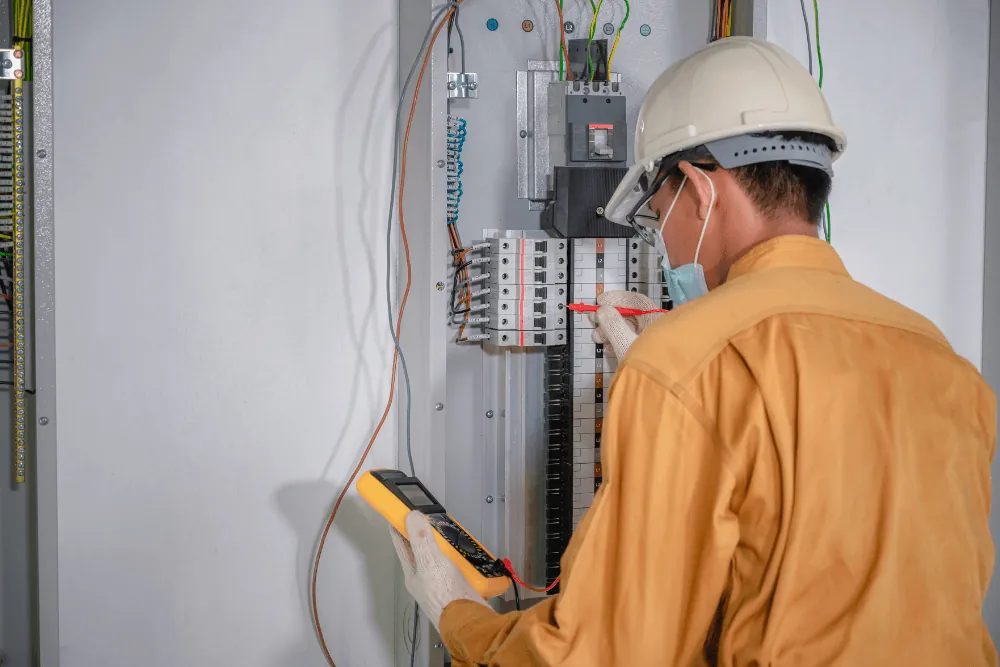
Electrical Inspection and Certificate in Dubai: EICR-Style Reports, Safety Checks and Testing
An electrical inspection tells you what condition your wiring is in before something goes wrong. A qualified electrician looks at the distribution board, the cables, the sockets and switches, and the earthing, then tests every circuit with calibrated instruments. The result is a written report that says whether the installation is safe to keep using, what needs fixing, and how urgently. Most fires, shocks and dead circuits start with a fault that was visible or measurable months earlier. An inspection finds it while it is still a small job.
Circuit Dubai carries out electrical inspections and issues electrical safety certificates and reports across Dubai, for apartments, villas, rented homes, shops, offices, warehouses and buildings. You may know the service as an EICR, short for electrical installation condition report, an electrical safety check, an electrical safety certificate or a periodic electrical inspection. EICR is a British term, but the report format behind it is the clearest way to record what was found, and it is the one most owners, agents and insurers recognise. We write our reports in that structure, with a coded finding for every defect and a test result for every circuit.
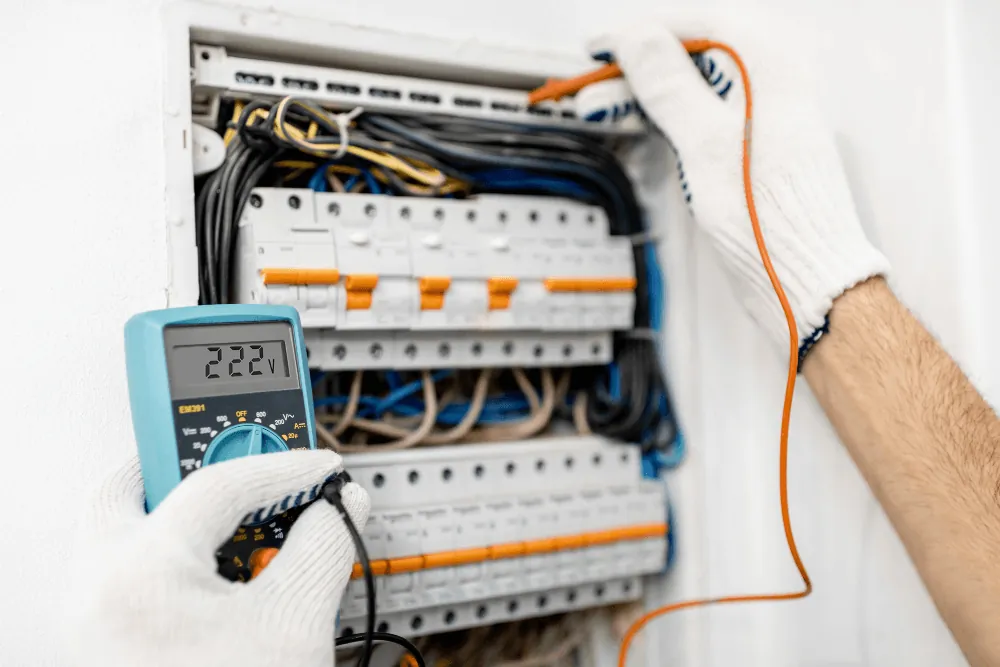
What an electrical inspection with us includes
A visual inspection of the distribution board, wiring, sockets, switches, light fittings, wet areas and outdoor circuits, looking for damage, overheating, wrong parts and missing protection.
Testing of every circuit, with readings for continuity, insulation, earth fault loop impedance and RCD operation, recorded circuit by circuit.
A coded report. Each defect is graded C1, C2, C3 or FI, and the report states an overall result of satisfactory or unsatisfactory.
A plain-language summary at the top, so you can read the result in a minute before you read the detail.
A repair quote, if you want one, with the work listed against the report's findings. The report does not depend on you hiring us for the repairs.
A re-test and a closing certificate once the urgent items are fixed, so you hold a clean document at the end.
The numbers at a glance
Typical answer for Dubai
Before you book an electrical inspection, decide what the report is for. A buyer who wants to know what the property will cost to put right needs the full tested report. A landlord who wants a record for a tenancy needs the same. A visual check with no tests is cheaper, and it tells you much less. The sections below explain the options and what each one finds.
Electrical inspection, safety check, certificate or report: which do you need
The names overlap, and companies use them loosely. What differs is what is actually done and what document you get.
| You may have heard | What it is | When it is used |
|---|---|---|
| Electrical inspection, electrical safety inspection, electrical safety check, electrical check, home electrical check | A visual inspection plus tests on an existing installation, written up as a report | Buying, selling, renting, after an incident, or as a routine check |
| Periodic electrical inspection, fixed electrical inspection, fixed wire testing, 5 year periodic electrical inspection | The same inspection, repeated at a set interval | Rented homes, commercial buildings, hotels, schools and any site with a maintenance plan |
| Electrical installation condition report (EICR) | The name of the report from a periodic inspection | When an agent, insurer or building manager asks for an EICR by name |
| Electrical installation certificate (EIC), electrical test certificate | A certificate for new work, signed by the person who designed, built and tested it | After a new installation, a rewire, a new circuit or a fit-out |
| Minor works certificate | A short certificate for a small addition, such as one extra socket | After small changes that do not need a full certificate |
| Final electrical inspection | The inspection and tests at the end of a build or fit-out | Before handover, occupation or connection |
| Electrical audit, electrical safety audit, electrical compliance check | A wider review of an installation and how it is maintained, with records, tests and a list of actions | Commercial sites, facilities managers and building owners |
| PAT testing, electrical appliance safety check | Tests on portable appliances such as kettles and extension leads | Offices, hotels and rentals |
| Thermal imaging inspection | A thermal camera scan of boards and connections under load | Alongside an inspection, or on its own |
An EICR and an electrical safety certificate are not quite the same thing. A certificate (an EIC) is issued for new work and says the work was designed, built and tested to the standard. A report (an EICR) is issued for an existing installation and describes its condition on the day. People use the phrase electrical safety certificate for both, and this page does too. What matters is that the document you get shows the tests, names the defects and is signed by a competent person.
What a report cannot do
An inspection describes the installation at the time of the test. It does not certify that nothing can ever go wrong, and it does not cover what is hidden inside walls and ceilings and not reachable without opening them up. The report states its limits, such as circuits we could not isolate or areas we could not reach, and you should read that section. Our thermal imaging inspection service goes further on boards and connections under load, and it is covered in the specialist inspections section below.
EICR and other UK terms: what they mean in Dubai
Many searches for electrical inspection services use the vocabulary of the British market. That vocabulary is useful, and some of it does not apply here. This is what each term means and what we do.
| If you searched | What it means | In Dubai |
|---|---|---|
| EICR, EICR certificate, EICR report, EICR test, EICR testing, EICR inspection | An electrical installation condition report from a periodic inspection | We issue a report in this format. The document is a report, not a certificate, but the name has stuck |
| C2 EICR, EICR codes | The observation codes. C2 means potentially dangerous and makes the report unsatisfactory | The same codes are used in our reports and explained below |
| EICR gov, gov EICR | A reference to UK government rules for private rented homes, which require an EICR at least every 5 years in England | These are not UAE rules. We are not aware of an equivalent law that requires a periodic inspection of a rented home in Dubai. Many agents, insurers and facility managers still ask for one |
| NICEIC EICR | NICEIC is a UK registration scheme for electricians | It does not operate here. The local equivalent is enrolment with DEWA, and we ask you to check any contractor's number |
| EICR register check, check EICR certificate, find EICR certificate, EICR certificate check | Looking up whether a report exists | There is no public register. The company that issued the report holds the copy. We keep the reports we issue and can send you a copy |
| EICR Derby, EICR Wimbledon, EICR nationwide | UK places | We are based in Al Quoz, Dubai, and work across the emirate |
| Bureau Veritas electrical inspection | A large international inspection and certification company | We are an independent electrical contractor and have no link to it. If you need a certificate from a named third-party body, see the choosing section below |
| Gas and electric safety certificate, gas electrical safety certificate | A UK landlord pairing of gas and electrical safety documents | We cover the electrical side only. For gas installations, ask a licensed gas contractor |
| Detector inspector electrical safety check | We could not tie this phrase to a specific service | If you mean a check of smoke or carbon monoxide detectors, we test hard-wired detectors as part of an inspection |
| Blank electrical test certificate | A search for a blank form | We do not supply blank forms. The report section below shows what a completed one contains |
The codes in plain words
- C1: danger present. Something could injure someone now, such as exposed live parts or a burnt, loose connection. It needs immediate action, and we normally make it safe at the visit, with your agreement.
- C2: potentially dangerous. A fault that is not an immediate danger but could become one, such as missing earthing, no RCD on socket circuits, or a damaged cable. It needs urgent repair.
- C3: improvement recommended. The installation is not unsafe but could be better, for example an old board with no surge protection or missing labels.
- FI: further investigation needed. We could not tell from the inspection what the fault is or how serious it is, and something more is needed.
A single C1 or C2 or FI makes the overall result unsatisfactory. C3 items alone do not. A report that is unsatisfactory is not a disaster: it is a list of things to fix, and a re-test shows they were.
When you need an electrical inspection in Dubai
There is no single reason, and the right moment is usually one of these.
- Before you buy. A tested report shows what the wiring is like before you commit, and gives you a basis for negotiating. A general property inspection looks at many things, and the electrical part is usually visual only.
- Before you sell or let. A clean report helps a sale or a tenancy go through, and removes arguments about the wiring.
- At a change of tenant. A report at move-in and move-out records the state of the installation.
- After an incident. A fire, a flood or water ingress from an air conditioner, a power surge, a lightning strike or a bad shock all justify a test before the circuits are used again.
- After renovation or a fit-out. New work should come with its own certificate, and an inspection checks that existing circuits were not damaged in the process.
- When something keeps going wrong. Frequent tripping, flickering lights, warm sockets, a burning smell or a tingle from a tap or appliance are signs of a fault that deserves a test. Our breaker tripping repair service finds a single tripping circuit, and an inspection covers the whole installation.
- For insurance, a landlord's agent or building management. Some of them ask for a recent report, and commercial leases and facility contracts often write the requirement in.
- As routine maintenance. An inspection at a fixed interval catches deterioration before it becomes a fault.
Stop and keep clear of any socket, board or appliance that is hot, scorched, buzzing or smells of burning. Switch it off at the breaker if you can do so safely, and call DEWA on 991 for an electrical emergency, or Civil Defence on 997 if there is fire. An inspection is for finding faults before that point.
How often
Recommended intervals depend on the type of property and how hard the installation works. UK guidance, which many inspectors follow, suggests about every 10 years for an owner-occupied home, every 5 years for rented homes, commercial premises and many public buildings, every 3 years for industrial sites, and every year for swimming pools. Dubai is hotter and more humid than the places those figures were written for, and air conditioners, water heaters and extended circuits work hard. We suggest 5 years for most villas and apartments, every change of tenant for rentals if the last report is older than 3 years, and every 3 years for heavily loaded commercial sites. The right interval depends on the work. A shorter interval costs more, and a longer one risks missing a slow fault.
Does Dubai require one?
We are not aware of a rule that requires an owner of a villa or apartment to have a periodic inspection of the whole installation at set intervals. New installations and changes must be done by a DEWA-enrolled contractor and meet DEWA's Regulations for Electrical Installations, and buildings come under Civil Defence and municipality requirements for fire and life safety. Where your tenancy contract, lease, insurer or building management asks for an inspection, that is the requirement. Where none does, an inspection is a sensible precaution and not a legal step.
What the inspection looks at: the visual check
The visual inspection comes first and takes up a large part of the visit. It finds problems that tests cannot, and it tells the tester where to look. The inspector works through the installation in a set order.
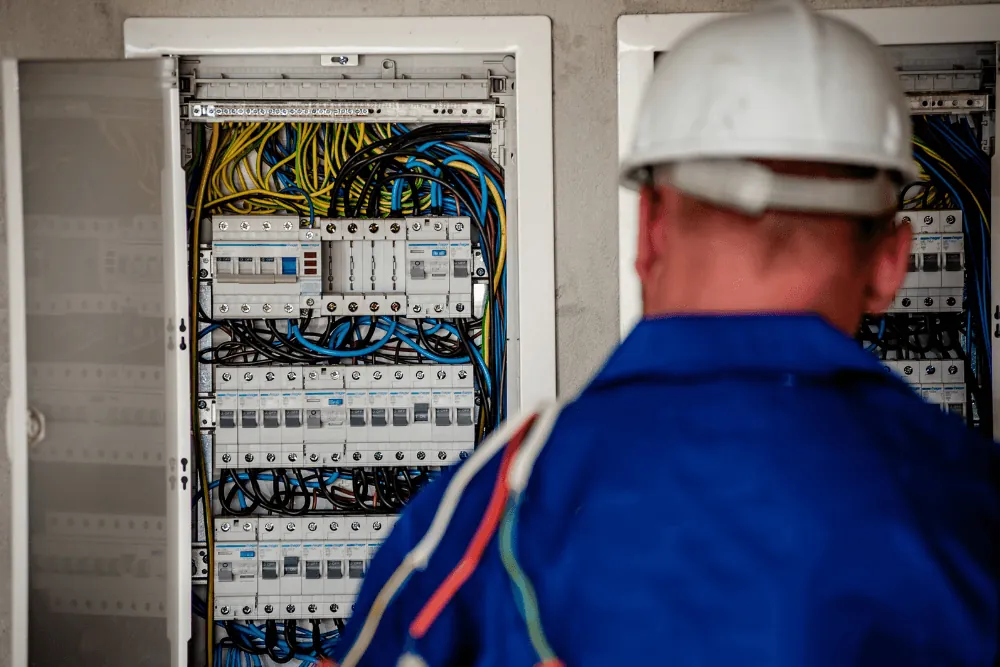
The distribution board
- Condition of the board and its enclosure, including heat marks, melted plastic, rust, dust, insects and water ingress.
- Breakers and RCDs: the right type and rating for each circuit, no double-fed terminals, no signs of overheating.
- Labelling: every circuit marked clearly, so someone can isolate it in an emergency.
- Connections: tight, undamaged, with cable ends properly terminated and no bare conductor showing outside the terminal.
- Protective devices: RCD protection on socket circuits and where the regulations require it, and surge protection where it is fitted or missing. Our surge protection service covers what to add.
- Space and access: the board is reachable, and nothing is stored in front of it.
Our DB box and distribution board service covers replacement or extension when the inspection shows that a board is beyond repair or full.
Earthing and bonding
Every installation needs a working earth, and a main earthing conductor connecting the earth terminal to the building's earth. Metal pipes, structural steel and other metal parts that could become live need bonding to it. The inspector checks that these connections exist, that the conductors are the right size and that the clamps are sound. Where earth readings are poor, see our earthing and grounding service, which covers new earth pits and repairs.
Wiring and accessories
- Cables for damage, pinching, overheating, the wrong type for the load, and joints made outside an enclosure.
- Sockets, switches and fittings: cracks, scorch marks, loose faces, damaged flex and overloaded multi-way adaptors.
- Lighting: the condition of fittings, especially downlights in ceilings with trapped heat.
- Wet areas: bathrooms, kitchens, balconies and outdoor circuits for the right protection level, bonding and RCDs.
- Large loads: air conditioners, water heaters, cookers and pumps on their own correctly rated circuits, with isolators where needed.
- Extensions and alterations: work done by earlier occupants that does not match the board, such as sockets added by spurring off the wrong place or circuits that have grown beyond their breaker rating.
What we often find in Dubai
These problems are common in Dubai homes and small commercial units, and they are the reason the visual check matters.
- Circuits that have grown over time, with air conditioners and water heaters added to wiring that was not sized for them.
- Missing or inadequate RCD protection on socket circuits.
- Heat damage at terminals, in roof-space junction boxes and at air conditioner isolators.
- Dust and sand in outdoor and plant-room boards.
- Water ingress from air conditioner condensate or leaks into boards and sockets.
- Overloaded extension leads and multi-way adaptors feeding heavy loads.
- Unlabelled boards and no record of what each breaker feeds.
- Alterations made by an earlier occupant without a certificate.
The tests: what an electrical inspection and testing visit measures
The visual inspection shows what an electrician can see. Tests show what they cannot. A cable can look fine and still have insulation that is breaking down, and a breaker can be correctly rated and still fail to trip fast enough in a fault. Electrical inspection and testing together is what makes the report worth having.
The main tests
| Test | What it checks | Why it matters |
|---|---|---|
| Continuity of protective conductors | That the earth wire is unbroken from the board to every point | If the earth path is broken, a fault can leave metal parts live |
| Continuity of final circuit conductors | That the live and neutral conductors are continuous, and for ring circuits that the ring is complete | A broken ring overloads one leg of the cable, and the damage is invisible |
| Insulation resistance | That the insulation between live conductors, and between live conductors and earth, is intact, tested at 500 V DC | Low readings point to damp, damage or ageing, and often come before a fault |
| Polarity | That live, neutral and earth go to the right terminals | Reversed polarity can leave a switched appliance live when it is off |
| Earth fault loop impedance | How easily a fault current can flow back to the board | Decides whether a breaker trips fast enough to protect you |
| Prospective fault current | The largest current a fault could produce at the board | Breakers and the board must be able to cope with it |
| RCD operation | That each residual current device trips at its rated current, and how quickly | An RCD that does not trip, or trips slowly, gives no protection against shock |
| Earth electrode resistance | The resistance of the earth electrode, where one is used | A high reading means the earth is not doing its job |
| Phase sequence | That three phases are in the right order, on three-phase systems | Wrong order runs motors backwards |
| Functional checks | That isolators, switches, controls and indicators work | Equipment that cannot be switched off safely is a hazard |
Limits and results
Each reading is compared with a limit. For insulation resistance, the usual minimum is 1 megohm on a circuit tested at 500 V, and a healthy circuit reads far above that. For RCDs, a 30 mA device should trip within 300 milliseconds at its rated current and within 40 milliseconds at five times that current. For earth fault loop impedance, the limit depends on the breaker type and rating. We record every reading, so you can see not only that a circuit passed but by how much. Those figures, which some people search for as an EICR reading, sit on the schedule of circuit details in the report. A circuit that passes with a very low margin is a reason to look closer.
Instruments
The tests use a calibrated multifunction tester, with a calibration certificate in date. A tester that has not been calibrated is no better than a guess. The report names the instrument and its serial number so the readings can be checked later.
What happens to your power and equipment
Some tests need the supply off. We agree the order of isolation with you, switch one circuit at a time, and keep the outage for each to a few minutes. Servers, fridges, medical equipment and anything that cannot lose power are planned around, and we can test out of hours for commercial sites. Insulation testing at 500 V can damage electronics, so we ask you to unplug computers, TVs, chargers and anything with a power supply from the circuits being tested, and we disconnect fittings that contain electronic drivers where we can.
How much gets tested
For a home, we test every circuit. For a large building, testing every circuit on every floor is not always practical, so we agree a sample with you before the visit and write it into the report. If the sample shows defects, we widen it. The report always states what was tested and what was not.
The report: what an electrical safety certificate contains and how to read it
An EICR, or an electrical inspection condition report, is a set of forms. Whatever the company that issues it calls it, a proper report has the same parts.
- 1Details: the client, the address, the purpose of the report, the date and the person who carried out the inspection.
- 2Extent and limitations: what was inspected and tested, what was not, and why.
- 3Summary of the condition: the overall result, satisfactory or unsatisfactory, with a short explanation.
- 4Observations and recommendations: every defect, its location, its code (C1, C2, C3 or FI) and what to do.
- 5Schedule of inspections: a checklist of the items looked at, ticked, marked as not applicable, or marked as a limitation.
- 6Schedule of circuit details and test results: one line for every circuit, with the breaker type and rating, cable size, and the readings for continuity, insulation, polarity, loop impedance and RCD trip times.
- 7Declaration: a signature, the qualifications of the inspector and the instrument serial numbers.
- 8Next inspection date: the recommended interval, with the reason.
We add photographs of the defects, so you can see what we saw. A single page that says "satisfactory" with no schedules attached is not an electrical test certificate. It is an opinion.
EIC and EICR: the difference
An electrical installation certificate (EIC), also called an electrical test certificate or an electrical safety test certificate, covers new work. It has three signatures in principle: the designer, the constructor and the person who inspected and tested. An EICR covers an existing installation. If you have had a new circuit, a rewire or a fit-out, you should receive an EIC for that work. If you want to know the condition of the whole installation, you need an EICR. We issue both, and a minor works certificate for small additions. Searches for an EIC electrical certificate or for the EIC and EICR together are about this difference.
The standard behind the report
The report format and test methods follow the structure of the British wiring standard, BS 7671, which is where the term EICR comes from. A BS7671 electrical safety certificate is the same idea, written to that standard. In Dubai, the limits that apply come from DEWA's Regulations for Electrical Installations, and we test against them.
How to check an electrical certificate
If you are given a report by a seller, a landlord or an agent, check it before you rely on it. Whether you search for a way to check an EICR, check an EICR certificate, check an electrical safety certificate or run an electrical certificate check, these are the questions:
- Who issued it, and can they be reached? A name, a company, a contact and, for work in Dubai, a DEWA enrolment number.
- Is the address right, and does it describe the part of the building that was tested?
- How old is it, and is that inside the recommended interval?
- What was the overall result, and are there any C1, C2 or FI items still open?
- Are the schedules attached, with test results for each circuit?
- Are the readings believable? Identical readings on every circuit suggest numbers that were copied and not measured.
- Was the extent enough? A report that covers only half the property tells you about half the property.
- Is it signed, with the inspector's qualifications and the instrument's serial number?
There is no public register that lists reports in Dubai, so the issuing company is the place to ask. If a report is unclear or you doubt it, we can review it and tell you what is missing.
What happens after an unsatisfactory report
An unsatisfactory result is not the end. The report lists what to do. C1 items are made safe at once. C2 and FI items are repaired or investigated as a priority, and we suggest a timescale in the report. C3 items are advice. The repair work, often called EICR remedial works, is quoted separately from the inspection, and you can have it done by us or by another electrician. Once the work is done, we re-test the affected circuits and issue a certificate for the work, with an updated report, so the record is clean. In a tower or a managed community, building management may need to approve work that touches common parts, and we tell you if that applies.
If you have a report from somewhere else and want the repairs done, send it and we will quote against its findings.
Home electrical inspection: apartments and villas
A home electrical inspection follows the same method as a commercial one, but the ways it goes wrong are different, and so is the visit. People search for it in many forms: a home electrical inspection, a house electrical inspection, a house electrical check, a home electrical check, a household electrical safety check, a home electrical safety inspection, a house electrical safety check or a domestic electrical safety check. A domestic EICR is the formal version, and some owners call it an electrical check up. They all mean the same visit.
Apartments
In an apartment the distribution board is inside the unit, and that is what we inspect and test, with the circuits that run from it. The building's risers, common areas and the main supply into the building belong to building management and DEWA, and we do not test those. For a tower, we notify building management before the visit if the building requires it. Most apartments take two to four hours.
Villas
A villa has more to test: a larger board, sometimes several boards, outdoor circuits, a gate and garden lighting, a pump, a water heater and often a pool. The roof space and the plant room may need access. A villa inspection usually takes half a day to a day, and a villa with a pool or an annexe takes longer.
A home electrical audit
Some owners ask for an electrical audit of the home. That means an inspection and test, plus a review of the loads: what the circuits carry, what has been added, and where the installation is at its limits. The result is a list of what to fix and a view on whether the supply, the board or the circuits will take the next addition, such as a second air conditioner or an EV charger. Our three-phase and load upgrade service covers a supply that has run out of capacity, and our energy audit service looks at where the power goes and what could be cut.
Before the visit
- Make sure we can reach the distribution board, the meter room if relevant, and any outdoor boards.
- Tell everyone in the home that the power will go off circuit by circuit.
- Unplug computers, TVs, chargers and sensitive equipment from the sockets.
- Tell us about anything that has been tripping, buzzing, warm or flickering, and about any recent work.
- Have any earlier reports and certificates ready.
The electrical appliance safety check
Appliances are a separate matter from the fixed wiring. A faulty kettle, heater or extension lead can be dangerous on a perfectly good circuit. An electrical appliance safety check, covered in the specialist section below, looks at the equipment you plug in. We can combine it with the inspection in one visit.
Landlords, tenants and rented property
A rented property changes hands often, and the people who use the wiring are not the people who own it. That is one reason inspections are so often requested for rentals.
For landlords
A landlord gains from a report in three ways. It shows the wiring is safe before the tenant moves in. It gives a dated record of the condition, which settles later arguments about whether a fault was there at the start. And it may satisfy an agent, an insurer or a lender who has asked for one. People look for this as an EICR for a landlord, an EICR landlord certificate, an EICR for rental properties, an EICR rental report, an EICR in a rented property, EICR testing for landlords, electrical checks for landlords, an electrical safety check for a landlord or an electrical safety certificate for landlords. In the UK, a landlord of a private rented home in England must hold a valid EICR, renewed at least every 5 years. That law does not apply in the UAE, and we are not aware of a Dubai rule that does the same. A landlord who has one is better protected all the same.
Landlord certificates (EICR). What a landlord should hold is the report with its schedules, the record of any repairs and re-tests, and the certificate for any new work. We give you a copy and keep one. We suggest an inspection at the start of a new tenancy if the last report is more than 3 years old, and in any case every 5 years. The right interval depends on the work.
For tenants
A tenant who wants to know the wiring is safe, for instance before signing a lease or after moving in, has a few options. Ask the landlord or agent for a recent report. Commission an inspection of the unit, with the landlord's agreement, because the installation is the landlord's. Or commission a visual check and a test of the circuits you use. A tenant electrical safety check records the condition at move-in, which protects you from being blamed for faults that were there already. Who pays for repairs depends on your tenancy contract and Dubai tenancy law. The report records what was found. It does not decide who pays, and we do not give legal advice on that.
Letting agents and portfolios
Agents and owners with several units often want a regular programme: an inspection at each change of tenant, a standard report format, and a repair quote on one page. We offer portfolio rates and a standard schedule. The rate depends on the number of units and the work, and is quoted after the AED 50 visit.
Commercial and building electrical inspection
A commercial inspection has more circuits, more boards and more constraints than a home. It also has more at stake, because a fault can close a business.
EICR for commercial property
An EICR for a commercial property, or for any commercial property you let, covers offices, shops, restaurants, clinics, warehouses and workshops. We work board by board, with a schedule agreed in advance. Testing is done outside trading hours for sites that cannot lose power, and critical circuits such as servers, cold rooms and tills are planned around. The report lists defects by board and by area, so a facilities manager can assign each one. For commercial premises we suggest an inspection every 5 years, and more often for kitchens, workshops and any site with heavy or heat-producing loads. The right interval depends on the work.
Building electrical inspection
A building electrical inspection covers the building's main installation: the main switchgear, risers, common-area boards, lighting, pumps, lifts' supplies, and emergency systems. For an owners' association or building manager, it also reviews the records: drawings, past test results and maintenance logs. We work from the building manager's written approval, and we agree what is in scope before we start. Where they are in scope, hard-wired UPS and generator installations are tested in the same visit. Our UPS and inverter installation service covers the backup systems themselves.
Electrical audit and compliance check
An electrical audit, an electrical safety audit or an electrical compliance check goes beyond a condition report. It reviews the installation, the records and how the site is maintained, against the standards and the regulations that apply, and ends with a list of actions in priority order. It suits a building owner preparing for a sale, a tenant fitting out a unit, or a facilities manager building a maintenance plan. We audit against the DEWA regulations and the IEC and BS 7671 wiring standards they refer to.
Final electrical inspection
A final electrical inspection is the inspection and test at the end of a build, renovation or fit-out. It checks that the work matches the design, that the installation is complete, and that every circuit has been tested, before the building is occupied or connected. It results in certificates for the work. For a fit-out, the landlord or building management may need the certificates before handover or before the supply is released. We can carry out the final inspection and issue the certificates, or review those produced by another contractor.
Specialist inspections: thermal imaging, ultrasonic, pools, emergency lighting and appliances
Some checks sit beside the standard inspection. Each answers a question the tests cannot.
Thermal imaging
A thermal imaging electrical inspection uses an infrared camera, and it may be called thermography, an infrared electrical inspection, an infrared thermography electrical inspection, an IR electrical inspection or, by brand, a FLIR electrical inspection. It shows heat. A loose terminal, an overloaded cable or a failing breaker runs hotter than its neighbours, and the camera shows it before it fails. The scan must be done with the installation carrying a real load, and the board covers need to be removed, so the work is done by a qualified person. Hot spots are graded by how much hotter they are than a similar connection. Our thermal imaging inspection service covers this in full, and it can be done in the same visit as an inspection, so one visit gives you both the tests and the heat map.
Ultrasonic inspection
An ultrasonic electrical inspection listens for the high-frequency sound made by partial discharge, tracking and corona on live equipment. It is used mainly on medium and high voltage switchgear in substations and plant rooms, and it finds faults that neither the eye nor a thermal camera can. It is rarely needed in a home or a small business.
Underground electrical inspection
An underground electrical inspection concerns buried cables, such as the supply to a gate, garden lights, a pool or an outbuilding. The inspection tests the insulation and continuity of those circuits, and where needed traces the cable route so that nobody digs through it. DEWA's own network cables are DEWA's responsibility, and if you are digging near them, contact DEWA first.
Swimming pool electrical inspection
Pools combine water, electricity and bare feet, so the rules are stricter and the interval is shorter. A swimming pool electrical inspection looks at the zones around the pool, bonding of metalwork, the protection of every circuit by a 30 mA RCD, the rating of fittings, the supply to underwater lights, and the pump and filter circuits. We suggest an inspection and test every year for a pool, and every year in hotels and clubs where the public use it. A villa pool is the case where a yearly test costs little and failure costs a lot.
Emergency lighting
An emergency lighting periodic inspection and testing certificate records that the lights come on when the power fails and last long enough to leave the building. The usual approach is a short function test each month and a full-duration test each year, often three hours. The UAE Fire and Life Safety Code and Civil Defence set what applies to buildings here and who may certify it. We test the fittings, record the results in a log and issue a certificate.
PAT testing and appliances
PAT testing covers portable appliances: kettles, heaters, extension leads, power tools and office equipment. A PAT test visual inspection is the first and most useful step, because most faults show as damaged flex, cracked plugs or burn marks. The test then checks earth continuity, insulation and leakage, and each item gets a label and a record. A PAT electrical certificate lists the items tested and the results. PAT testing and an EICR are different. The first covers what you plug in, and the second covers the fixed wiring, so an EICR and PAT test together make a full check. Our PAT testing service handles the appliances, and we can do both in one visit.
What an electrical inspection costs in Dubai
The cost of an inspection depends mostly on the size of the property and the number of circuits. People search for it in many ways: the cost of an EICR, the cost of an EICR report, the cost of an EICR certificate, the cost of an EICR test, the cost of an electrical safety check, how much an EICR costs, how much an electrical inspection costs, an electrical inspection price, the price of an electrical safety certificate or how much an electrical test certificate costs. Whatever the form, they ask the same question, and the honest answer is a price range and a way of working it out.
The same price answers many of the wordings:
| If you searched | The answer |
|---|---|
| How much does EICR cost, how much does an EICR cost, how much is EICR | AED 485 to 1,165 for an apartment and AED 1,165 to 4,365 for a villa, for a full test and report |
| EICR price, EICR certificate price, EICR test price | The same figures: the price of the inspection, the tests and the written report |
| Electrical safety certificate cost, cost electrical safety certificate, electrical inspection certificate cost, electrical safety inspection cost, electrical safety check price | The price of an inspection of an existing property, from the table below. A certificate for new work is part of the price of that work |
| Electrical installation condition report EICR cost, how much is an electrical test certificate | The same, and for new work the certificate is included in the installation price |
| House electrical inspection cost | The villa and apartment ranges below |
| Landlord electrical safety certificate cost | The range for the property type, with portfolio rates for several units |
| Property | Typical price (AED) | Notes |
|---|---|---|
| Studio or one-bedroom apartment | 485 to 775 | Full test and report |
| Two or three-bedroom apartment | 680 to 1,165 | Full test and report |
| Villa, four to five bedrooms | 1,165 to 2,425 | Several boards, outdoor circuits |
| Large villa with pool, annexe or outbuildings | 2,425 to 4,365 | Pool test included |
| Small shop or office unit | 1,165 to 2,910 | By number of boards and circuits |
| Larger commercial unit or building | Quote after a survey | Sample agreed, out-of-hours work |
| Thermal imaging add-on | Quoted after the visit | Needs a loaded system |
| Re-test after repairs | Quoted after the visit | Affected circuits only |
The site visit costs AED 50, and the quote follows it. Prices include the inspection, the tests, the written report and a copy of the schedules. They do not include repairs.
Cost per circuit
Some inspectors price by the circuit or by the board: a rate per circuit tested, with a minimum. An EICR cost per circuit makes sense when circuits vary a lot, and for large sites it keeps pricing transparent. For a home, a fixed price for the property is easier to compare. We quote a fixed price for a home, and a rate per circuit for a large site, after the AED 50 visit.
What moves the price
- The number of circuits and boards, the largest factor.
- The size and layout, including how far apart the boards are.
- Access, such as rooftop plant, locked rooms and tower approvals.
- Out-of-hours work, for sites that cannot lose power in the day.
- The size of the sample in a large building.
- Thermal imaging, pool testing and appliance testing added to the visit.
- The level of detail in the report, including photographs and a priority plan.
A cheap report
A cheap EICR certificate is tempting, and it is where the risk lies. A quote far below the rest may be for a visual check with no tests, for readings that are copied and not measured, or for a report with no schedules. Ask what is included, whether every circuit is tested, whether the instrument is calibrated and whether the report names the inspector. A low price that leaves out the testing buys a visual check, not an inspection. Ask any inspector for the report format before you book.
The cost of the repairs
The inspection price is not the repair price. Most reports find some items to fix, and these are quoted separately against the findings. We give you a priced list, with the C1 and C2 items first, and you decide what to do. The report is yours, and you are free to use any electrician for the repairs.
How an electrical inspection runs, step by step
1. Scope and quote
You tell us the type and size of the property, the reason for the inspection and who will read the report. A photo of the distribution board helps. We give you a fixed price and agree the extent: which boards, which areas, whether a sample applies and whether you want thermal imaging or a pool test.
2. Booking and access
We agree a date and the order of isolation. For apartments and commercial units in managed buildings, we confirm any building approvals first. You make sure we can reach the board and any outdoor or plant areas.
3. Visual inspection
We walk the property, open the boards and work through the checklist described above. We photograph defects as we go.
4. Testing
We test each circuit with the calibrated instrument and record the readings on the schedule. We isolate circuits one at a time, and tell you before each one goes off.
5. Making dangerous items safe
If we find a C1, such as a live conductor exposed or a burnt connection that is still in use, we tell you on the spot. With your agreement we isolate it or make it safe before we leave, so you are not living with a danger while you wait for a report.
6. The report
We prepare the report with the summary, the coded observations, the schedules, the photographs and the signature. We send it within 24 hours of the visit. You receive it as a PDF, and a printed copy if you want one.
7. Walk-through
We go through the findings with you, by phone or in person, explain what each code means for your property, and answer questions. This is the part that turns a document into a decision.
8. Repairs and re-test
If the report is unsatisfactory, we quote the repairs against the findings. After the work, we re-test the affected circuits and issue a certificate for the work and an updated report. The closing document shows the installation as it now stands.
Choosing an electrical inspection company
Many firms offer inspections: electrical contractors, facility management companies, independent inspectors and certification bodies. If you search for electrical inspection companies or electrical inspection services, you will find all of them. The right one depends on what the report is for.
Questions to ask
- Who will do the inspection, and what are their qualifications? The inspector's name and credentials should be on the report. Our inspectors are experienced electricians, and the report names the one who did your inspection.
- Are they enrolled with DEWA? Ask for the number and check it.
- Will every circuit be tested? If not, ask what the sample is and why.
- Is the instrument calibrated? The calibration date and serial number should be on the report.
- What does the report look like? Ask for an example with names removed. It should have schedules, not just a summary.
- What is the price, in writing, and what is excluded?
- Is the repair quote separate from the report? A fair firm quotes repairs after the report and does not make the report depend on hiring them.
Independence and third-party inspection
An electrician who inspects an installation they built or maintain is checking their own work. For most homes that is acceptable, and the report is only as good as the tests. For some purposes, a third-party electrical inspection by a body that has no stake in the repairs carries more weight: a sale dispute, an insurance claim, a lender's requirement or a project handover. If a regulator, lender or building authority requires a named or accredited body, use that body. If you only want a report free of any link to the repair work, you can commission the inspection from us and have the repairs done elsewhere, or have another firm inspect.
Near me
People search locally in different ways. Our answer is the same, and it is quick.
| If you searched | What happens |
|---|---|
| Electrical inspection near me, electrical inspection services near me | Send the property type, size and a photo of the board on WhatsApp; we quote and book |
| Electrical safety certificate near me | Same; tell us what the certificate is for |
| EICR electrician, EICR electricians, electrician EICR | Our inspectors carry out and sign the reports |
| Third party electrical inspection near me | See the independence section above |
| Free electrical inspection near me | We do not give free inspections, because the tests take hours and the instruments need calibrating. Where you only want a repair quote, the visit costs AED 50, and we credit it if you go ahead. |
Red flags
- A very low price with no mention of testing.
- A report with no schedules, no readings and no inspector's name.
- The same readings on every circuit.
- An inspection that finds nothing at all, in an older building, in a few minutes.
- A firm that refuses to show a sample report.
- A firm that tells you the report is only valid if they do the repairs.
Electrical inspection and certificates with Circuit Dubai
- Every circuit tested, with readings recorded, not a visual check sold as an inspection.
- Coded findings you can act on, with photographs, so you see what we saw.
- A walk-through of the report, so you know what to fix first and why.
- No pressure on repairs. The report stands on its own, and the repair quote is separate.
- One team for the inspection, the repairs and the re-test, if you want it, with a clean certificate at the end.
We work across all of Dubai. Our office is in Al Quoz.
If you are also planning thermal imaging, PAT testing, a distribution board upgrade, surge protection or earthing work, we can plan it with the inspection.
Phone: +971 55 407 7427
Electrical inspection questions we hear from Dubai owners
How much does an electrical inspection cost in Dubai?
A full test and report for an apartment is typically AED 485 to 1,165 and for a villa AED 1,165 to 4,365 depending on size, circuits and whether there is a pool. A site visit costs AED 50, and the price follows it. Repairs are quoted separately.
Is an EICR required in Dubai?
We are not aware of a law that requires a periodic inspection of a home. Your lease, insurer or building management may ask for one.
What is the difference between an EICR and an electrical safety certificate?
An EICR is a report on an existing installation. A certificate is issued for new work. Most people use the two names for the same document, and what matters is that it has test results and is signed.
How long does an inspection take?
Two to four hours for an apartment, half a day to a day for a villa, and longer for a commercial building.
Will the power go off?
Circuits are switched off one at a time for a few minutes. We plan around fridges, servers and anything that cannot lose power.
What does C2 mean, and is my report a fail?
C2 means potentially dangerous. Any C1, C2 or FI makes the overall result unsatisfactory, and the report lists the work to put it right. A re-test after repairs gives a clean result.
How often should I have an inspection?
We suggest every 5 years for homes and commercial units, at a change of tenant if the last report is old, and every year for swimming pools. The right interval depends on the work.
Can you inspect a property I am buying?
Yes. We test the circuits and give you a report you can use in negotiation. We need the owner's or agent's permission to access the property.
Can I use a UK EICR for a property in Dubai?
No. A report describes one installation on one date. A UK report tells you nothing about a property here, so the property needs its own inspection.
Do you do thermal imaging?
Yes, with a loaded system. See our thermal imaging inspection service.
Who signs the report?
The inspector who carried out the work, with their qualifications and the instrument serial numbers on the report.
Can you check a report someone else gave me?
Yes. We check the schedules, the readings and the extent, and tell you what is missing.
Do you inspect swimming pools?
Yes, including bonding, RCD protection and the pump and lighting circuits.
Can you inspect a commercial building out of hours?
Yes. We agree a schedule and test board by board, so the business keeps trading.
What if my report is unsatisfactory?
We quote repairs against the findings, make any C1 safe at the visit, and re-test afterwards. You can have the repairs done by us or by someone else.
Do you offer free electrical inspections?
No. A proper inspection needs hours of work and calibrated instruments. A visit to look at a repair costs AED 50.
Do you work outside Dubai?
We work across all of Dubai. Other emirates have different utilities and rules, so we confirm them before quoting.
Ready to book an electrical inspection?
Send the type and size of the property, why you want the inspection, and a photo of the distribution board. We reply instantly on chat with a fixed price, the time the visit will take and anything we need from you, so you know the job before anyone visits.